


If your ideal camping trip involves more than a smooth drive to an established campground, choosing the right travel trailer matters.
But what actually makes a travel trailer off-road capable? It’s not just about aggressive-looking tires or a rugged exterior. The suspension, ground clearance, hitch, tires and overall construction all play a role in how a trailer handles rough terrain.
At B&B RV, we’re a family-owned dealership in Denver specializing in off-road and off-grid trailers. We help people find the right setup for the adventures they have planned, whether that’s exploring back roads to reach a quiet campsite or heading farther out onto more demanding terrain.
We asked Andrew from our team to break down four important features to look for when shopping for an off-road travel trailer. We’ve also added another bonus feature to consider (keep reading to find out). Here’s what to know before choosing your next adventure rig.
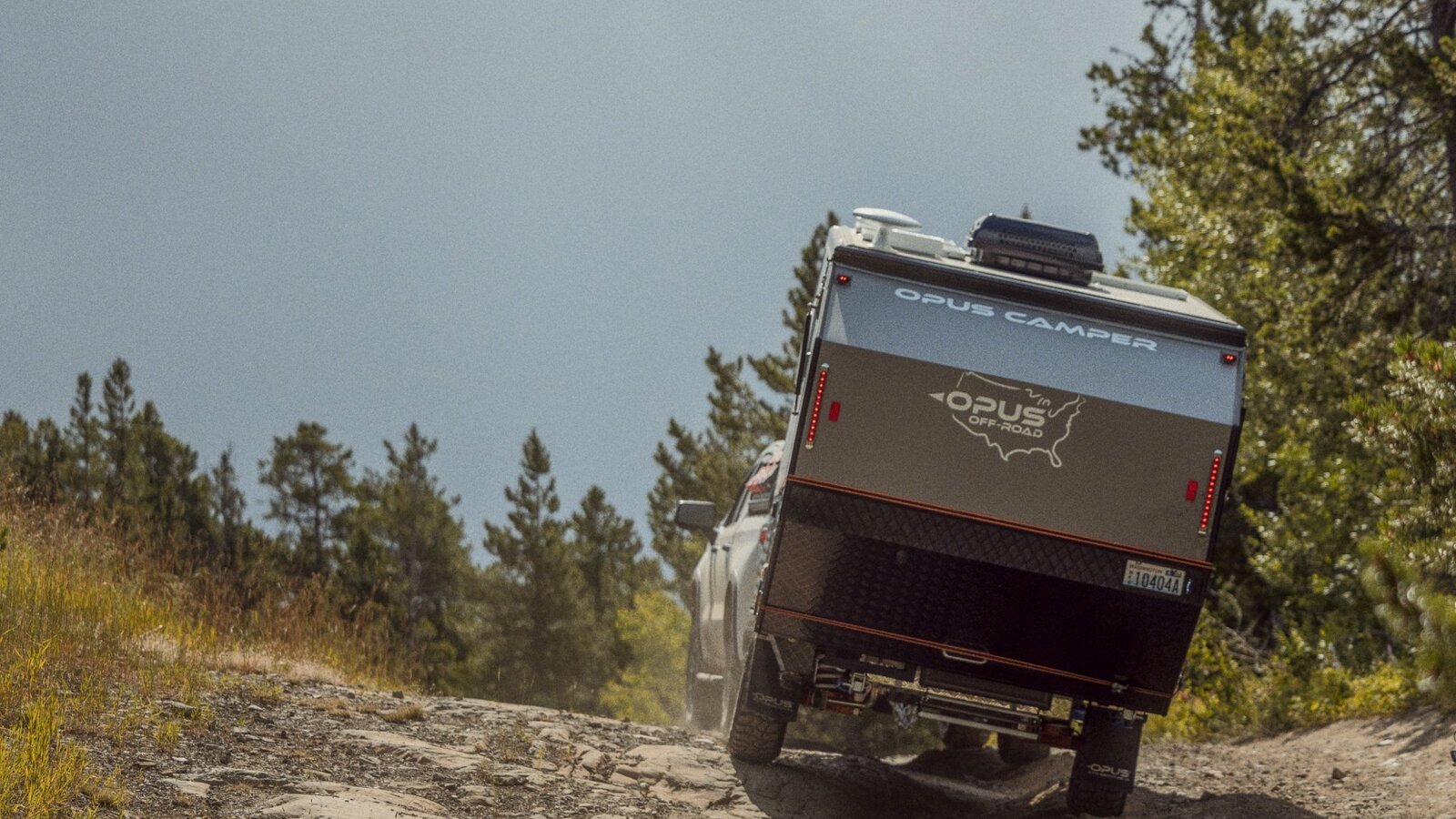
What Does Off-Road Capable Actually Mean?
Before comparing features, think about where you want to take your trailer.
For some campers, off-road means driving maintained gravel roads or forest service roads to reach a dispersed campsite. For others, it means navigating washboard roads, deep ruts, rocky inclines and uneven trails where the tow vehicle and trailer need to move through very different angles.
Those adventures can require very different equipment.
If you’re primarily traveling on maintained dirt and gravel roads, you may not need a purpose-built off-road trailer. Depending on road conditions, the trailer’s design and the manufacturer’s guidance, a conventional travel trailer may be suitable for the routes you have in mind. There’s no reason to pay for capabilities you don’t need.
But if your plans involve rougher, more technical terrain, it’s worth paying closer attention to how a trailer is engineered. That’s where the following four features come into play.
One other thing to keep in mind: off-road and off-grid are two different capabilities. Off-grid refers to camping without traditional hookups, which depends on things like battery capacity, solar power and water storage, learn more about off-grid camping systems here. Off-road capability refers to the terrain a trailer is designed to handle. A trailer can be excellent for off-grid camping without being built for technical trails.
1. Suspension: How Does the Trailer Handle Rough Terrain?
Suspension is one of the first things to investigate when comparing off-road travel trailers.
As a trailer travels over uneven ground, its suspension helps the wheels respond to bumps, dips and obstacles. On rougher routes, that movement matters because repeated jolts and impacts can affect the trailer’s stability and put stress on its components.
Most purpose-built off-road trailers use independent suspension, which allows each wheel to move more independently as it encounters uneven terrain. Depending on the design, this can help the wheels maintain contact with the ground and reduce some of the movement transferred through the trailer.
However, independent suspension isn’t an automatic guarantee of off-road capability. The complete design matters, including suspension travel, load capacity, durability and how the system works with the trailer’s overall construction.
What to look for: Ask what type of suspension the trailer uses, how it’s designed to handle uneven terrain, and what type of use the manufacturer recommends. Don’t stop at the feature name; understand how the system fits into the trailer as a whole.

2. Ground Clearance: What’s Underneath Matters
A trailer might look tall and rugged from the outside, but what matters is how much clearance it has at its lowest points.
Ground clearance is the space between the ground and the components underneath the trailer. When you’re traveling over rocks, ruts or uneven inclines, insufficient clearance can leave vulnerable components exposed to impacts.
Andrew points out that ground clearance works hand in hand with suspension. A capable suspension system needs enough room to work, while the trailer’s overall geometry helps determine how it moves over obstacles without bottoming out.
It’s also important to look beyond a single clearance measurement. The lowest point underneath the trailer may be an axle, stabilizer, tank or another component. Approach and departure angles, wheel placement and overall design can also affect how well a trailer navigates uneven ground.
What to look for: Ask about the trailer’s ground clearance and identify its lowest exposed components. Find out whether vulnerable parts are protected and whether the manufacturer recommends the trailer for the type of obstacles you expect to encounter.

3. Articulating Hitch: Why Does Hitch Movement Matter Off-Road?
When towing on uneven terrain, your tow vehicle and trailer won’t always follow the exact same line.
An articulating hitch allows the trailer and tow vehicle to move at different angles when navigating uneven terrain. This added flexibility is especially helpful when one side of the vehicle climbs over an obstacle while the trailer follows a different path.
Not all articulating hitches work the same way, though. Their range of motion, ratings and compatibility vary, and an articulating hitch doesn’t make every trail suitable for towing.
What to look for: Ask how the hitch moves, which directions of articulation it allows, and whether it’s designed for the terrain you intend to travel. Make sure the hitch is compatible with your tow vehicle and trailer, and follow the manufacturer’s towing guidance.

4. Frame and Construction: Is the Trailer Built for the Journey?
A trailer can have capable suspension, good ground clearance and an articulating hitch, but the overall construction still needs to match the intended use.
Rough terrain exposes a trailer to repeated vibration, impacts and twisting forces. If its frame, mounting points and other components aren’t designed for that kind of use, the journey can take a toll on the trailer and its contents.
As Andrew explains, reaching the campsite is only half the equation. You also want your trailer and everything inside it to arrive ready for the adventure.
That means looking beyond the exterior. The frame and chassis, how components are secured, and the protection provided to vulnerable underbody areas all deserve attention. The cabinetry, doors, drawers and other interior components also need to be suited to the conditions the trailer is designed to handle.
What to look for: Ask how the frame and chassis are constructed, how major components are secured, and what protection is provided underneath. Look for a trailer whose overall construction and manufacturer-stated capabilities match your intended use.

Bonus: Don’t Forget the Tires
Although suspension, ground clearance, hitch design and construction are the four main features we’re focusing on, tires are another important part of the overall setup.
Consider the tire’s load rating, size, construction and tread design. The tires need to be appropriate for the trailer’s weight and intended terrain, and tire pressure should follow the tire and trailer manufacturers’ recommendations.
Aggressive tread can help with traction on certain surfaces, but rugged-looking tires alone don’t make a trailer off-road capable. They need to work with the suspension, clearance and overall design.

Do You Really Need an Off-Road Travel Trailer?
Not everyone needs a purpose-built off-road trailer, and that’s worth considering before spending more on specialized features.
If your trips mainly involve established campgrounds and maintained gravel or forest roads, a conventional travel trailer may be suitable, depending on road conditions and the manufacturer’s recommendations.
If you’re regularly navigating deep ruts, rocky inclines or more demanding trails, a trailer designed for those conditions may be a better fit.
The best choice isn’t necessarily the most rugged trailer available. It’s the one that fits your plans, your tow vehicle, and the places you want to go.
Explore Off-Road Travel Trailers at B&B RV
Looking for your next adventure rig? Here are four options from our current inventory built with off-road exploration in mind, from compact campers to rugged, full-featured travel trailers.


Want to see what else might fit your adventures? Explore our full inventory or stop by our Denver showroom to talk with our team.
Finding the Right Off-Road Travel Trailer For Your Adventures
At B&B RV, we’re happy to help you compare trailers and understand which features matter for your plans. As a family-owned dealership in Denver, we believe in helping people find the right rig for their adventures, without pushing them toward more capability than they need.
FAQs
What makes a travel trailer off-road capable?
Off-road capability comes from a combination of suspension, ground clearance, hitch design, frame construction and supporting components such as tires. The right combination depends on the terrain the trailer is designed to handle.
Is independent suspension better for off-road travel trailers?
Independent suspension can offer advantages on uneven terrain, but its effectiveness depends on the design, durability, load capacity and intended use. It isn’t the only factor that determines off-road capability.
How much ground clearance does an off-road travel trailer need?
There’s no single clearance measurement that’s right for every trail. Consider the terrain you plan to travel, the trailer’s lowest components and its overall geometry, along with the manufacturer’s recommendations.
Can you take a regular travel trailer on dirt roads?
Some conventional travel trailers can handle maintained dirt and gravel roads. More demanding terrain may require additional capability, so always consider road conditions and the trailer manufacturer’s guidance.
What's the difference between an off-road and an off-grid trailer?
Off-road refers to a trailer’s ability to handle rough terrain. Off-grid refers to camping without traditional hookups. A trailer can offer either capability or both.